
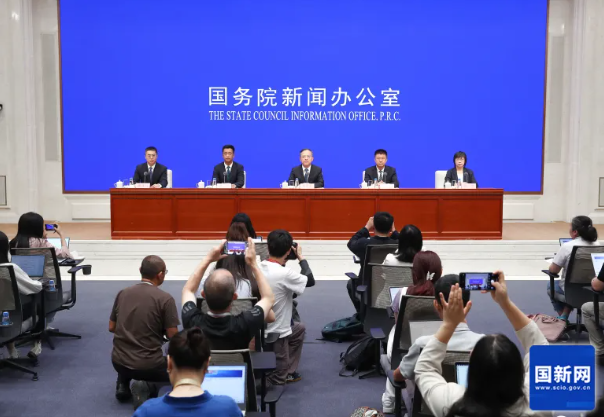
On July 29, 2026, China’s National Intellectual Property Administration (CNIPA) held a press conference relating to IP and the 15th Five-Year Plan. Liang Xinxin, Director of the Strategic Planning Department of the CNIPA, stated that the “National 15th Five-Year Plan continues to include the number of high-value invention patents per 10,000 people as a major indicator of national economic and social development” with a “target for high-value invention patents per 10,000 people set at more than 22, an increase of more than 6 compared to the end of the 14th Five-Year Plan period.”
Director Liang also defined high-value invention patents as
- First, invention patents in strategic emerging industries, such as those in next-generation information technology and new energy;
- second, invention patents with patent families overseas, mainly referring to overseas authorized patents with the same technical solution;
- third, invention patents with a maintenance period exceeding 10 years; and
- finally, invention patents that have won the National Science and Technology Award or the China Patent Award.
Note that this removes one of the previous categories of high-value patents: A patent that realizes a higher amount of pledge financing (secured debt).
Director Liang also noted that “patents in strategic emerging industries account for over 70% of my country’s high-value invention patents, and this proportion is expected to further increase during the 15th Five-Year Plan period, providing stronger innovation support for the quality improvement and expansion of emerging industries and the implementation of future industry layouts.”
Rui Wenbiao, Spokesperson and Deputy Director of the CNIPA, stated that “we will further improve intellectual property protection rules in fields such as artificial intelligence, big data, and algorithms, strengthen intellectual property protection and utilization, enhance cross-regional and cross-departmental intellectual property cooperation, and deeply participate in the formulation of relevant international rules and standards to help better stimulate innovation and seize development opportunities earlier.”
Rui also stated that “as of the end of June, my country had 2.36 million high-value invention patents, with 16.8 high-value invention patents per 10,000 people.” Further, “In the first five months, my country’s intellectual property royalties exports reached 45.5 billion RMB, a substantial year-on-year increase of 64.9%, indicating that Chinese enterprises are actively using intellectual property to create new competitive advantages in the international arena and promoting the upgrading and improvement of my country’s service trade.”
Regarding Artificial Intelligence (AI), Rui stated:
On the one hand, we will continue to promote innovation in the intellectual property system related to artificial intelligence. We will conduct in-depth research on the patentability, applicants, and protected objects of AI-generated products, revise the “Guidelines for Patent Applications Related to Artificial Intelligence” as needed, and continuously improve patent examination standards for emerging and future industries such as “AI+” embodied intelligence and brain-computer interfaces, strengthening institutional guarantees for the patent protection of innovative achievements. We will improve the regular updating mechanism of the list of acceptable goods and services for trademark registration, actively assisting the AI industry in its trademark registration applications and safeguarding its development. Currently, my country has over 900 publicly accepted goods and services projects involving new industries and new business models such as artificial intelligence and big data, and this list will be updated regularly. We will optimize public intellectual property services to support breakthroughs in core AI technologies, conduct patent analysis and early warning, help clarify research directions, and shorten the pre-research cycle. We will guide the construction of patent pools in the field of artificial intelligence, promoting more high-quality patents from the laboratory to the industrial chain, empowering the development of related industries.
On the other hand, we will continue to promote the use of artificial intelligence (AI) to improve the quality and efficiency of intellectual property (IP) work. We will expand the deployment and application scenarios of large-scale AI models in the IP field, enhancing AI’s application capabilities in various areas such as IP examination, protection, utilization, service, management, and security. We will continue to optimize and upgrade the AI-assisted patent and trademark examination system, improving the accuracy and response speed of examination and retrieval. We will strengthen the application of AI in areas such as administrative law enforcement and administrative adjudication, enhancing capabilities such as online identification, real-time monitoring, risk warning, and source tracing. Utilizing AI and big data technologies, we will continue to effectively screen high-value patents from universities and research institutions and match them with enterprises, promoting the normalization of patent commercialization and utilization.
Furthermore, during the 15th Five-Year Plan period, we will also deeply participate in international cooperation on intellectual property rights in the field of artificial intelligence, actively participate in the construction of relevant international rules, technical standards, and governance systems, and promote artificial intelligence technology to better benefit all mankind.
A full transcript of the press conference is available here (Chinese only).
